What's Up?

So much depends on who you are asking! But in the Pilates Garage lately there has been a lot of refinement of what the direction Up means to the body. In our combined knowledge of Pilates, Alexander and from Caroline Feig, our PT and Feldenkreis practitioner, Up means awareness of the body in multiple dimensions and movements.
One thing is clear:  Up doesn't pull you down.

Here are three experiments you can play with at home or in the studio:

1. Standing on the floor. Notice if your pelvis is dropped or weighted down on your legs. Ask your legs not to pull down on your pelvis. You could also ask your pelvis to float on your legs.

2. From standing, lift up your heels or releve up onto your toes or the balls of your feet.
(You can place one hand on a wall for balance) How did you come up? Did your pelvis push forward first? What is it to come straight up rather than hanging forward in your lower back or hips? What needs to shift for you to go straight up?

3. Lie prone on the floor. Tuck one set of toes under. Begin to straighten that knee using your low quad muscles just above the knee. Notice if you stay balanced in the pelvis as you straighten or if your pelvis drops and presses down as you extend the knee. What would it be like if the knee extension gave a support up into the hip and all the way up through the top of the spine?

We look forward to exploring all about "Up" in the upcoming workshop.


Workshop: WHAT'S UP? Monday June 6 at 7.30PM

Owner of studio Margi Douglas and senior teacher Theresa Squire will co-teach a 1.5 hour workshop using mats and equipment to help clients explore finding more buoyancy, ease and support from the ground up. Participants will be learning through movement so come prepared to work out and get lighter.

Read this story on "Two exercises to improve health of our feet - most overlooked part of human body" in South China Morning Post which has inspired a part of our What's Up workshop.


“Core and Cardio” Workshop with Gabe

Gabriel, is not only a personal trainer but he is also an actor with an MFA from Columbia University and a founding member of Magis Theatre Company. Gabriel incorporates his physical theatrical training into his fitness training. And that combination makes his approach completely creative and unique. His approach is not a quick fix or a fad but scientifically based for long-term sustainability.

Gabriel believes in an inclusive, unpretentious, straight-forward approach that addresses topics thoroughly in detail yet is easy to understand and employ. 

Fitness & Fun are not mutually exclusive and with discipline, dedication and unrelenting determination your goals are limitless. Feeling Fit and Fabulous go together hence Gabriel's creation - PHOENIX FAB FITNESS - Be re-born and join the Fun so you can be Fab for Life.  To learn more about Gabe visit his Facebook page.

Come Join us on May 2nd at 7.30pm at the Pilates Garage for a 90-minute “Core and Cardio” Workshop with Gabe. 

The cost is $35. You can sign up through your Mindbody account. Hit the Enrollment tab to pay and reserve your spot.

Core and Cardio (C&C) will focus on building a firm foundation of the Lumbo-Pelvic-Hip-Complex (your core) that compliments cardiovascular activity.  C&C utilizes the "Kinetic Chain Check Points" in proper alignment and technique, resulting in optimal functional movement for all fitness levels.  The Kinetic Chain is the integration of the muscular, skeletal and nervous systems for bodily movement. 

C&C will go through a series of exercises from the rudimentary to the complex that will create a strong core for high levels of endurance. C&C will conclude with a "circuit" (a series of exercises in rapid succession) illustrating how to incorporate these exercises into your daily routine.

Be ready to move and have tons of fun as all of Gabriel's workshops conclude with a fitness-cardio dance party!

Fitness and fun are one :-)

Gabriel Portuondo 

National Academy of Sports Medicine (NASM) - Certified Personal Trainer, NASM Certified Weight Loss Specialist , NASM Certified Integrated Flexibility Training, Fitness Instructor CKO Kickboxing

Follow his Facebook page, Phoenix Fab Fitness

How Pilates and Alexander Support Performers

Margi in the “The Millay Sisters”

Margi in the “The Millay Sisters”

Six years ago I met an incredible Alexander teacher who asked me what I thought an extremely personal question: "Do you consider yourself a sensual person?" It took a while to unpack that question, to realize that she was getting at "thinking vs sensing" moment to moment both in life and on stage. And that conversation opened up a whole new way of being in my body that changed me as a performer, and as a teacher of Pilates forever.

Some people in the world of acting and voice training have a very negative view of strength training and core training specifically. That is because so often fitness instructors encourage a kind of “brace here, hold here, now move” technique that makes their client very strong but also a little bound down and unable to breathe or speak freely. There is what we call in the Alexander world a lot of “end-gaining” in the name of fitness that lacks an element of awareness and taking care of the whole self. 

The idea that one could be grounded, strong and available without holding tension is one that is not so understood by many people and not so easy to teach either.

After three years of graduate school as an actor and my early experience with teaching Pilates, I began to realize that actors needed a core, but they needed a free one and for that matter so did just about everyone I know. That quest for a mobile core, along with an injury to my ribs in a rehearsal room, led me to the brilliant Chloe Wing where I studied the Alexander technique, and also to the Kane School where I worked with a number of very smart movers and Pilates teachers.

As I write this, I am getting ready for a performance of a two person show that is a cabaret, theatrical event, and play all rolled into one. It's a show I started writing and working on while I was training with Chloe and I feel she is still with me, still guiding me as we remount it years later at the Gowanus Loft: "The Millay Sisters." Chloe passed away two years ago but I know she is still listening. 

In this show, I play the poet Edna St. Vincent Millay, an extremely intelligent but also sensual writer, a Pulitzer Prize winner in the 1920’s.  To have a sensual intelligence, to sense what the body is doing and to allow sound and expression to flow out through very precise poetic language and musical numbers is a challenge. It’s not so different though from the challenge of doing a knee fold without clenching the jaw or stiffening in the neck. It is about awareness: awareness of a habit, inhibiting that habit, and then directing into something that frees you. Make a choice to do something different, something that opens and radiates, rather than something that closes and drops away.

I would not be able to do the work in this show or to connect to the wholeness of teaching and training without this connection I found to the body via Alexander, and not only Alexander but the intersection of Alexander with the activity of Pilates. These two methods in some ways seem to be odds, but when given a chance to dialogue can bear fruit.

I spent this weekend teaching and taking sessions at a conference for actors and Alexander teachers from all over the country. The conference called “Freedom to Act” happens annually. I was given the opportunity to teach along with one of my colleagues from Magis Theatre Company, a training and actor-based company in New York City. We taught a class at the conference called “Awakening Your Text.” Its theme was balance: balance in movement, balance in the room, balance and core on a squishy ball, and balancing on your bones.” Oddly enough, finding balance is a very global way of freeing the body, voice and imagination. Here is what one of the young actors had to say at the end of the class: “I did this monologue from Walt Whitman in my Voice and Speech class and even then I got stuck doing the same thing but here it was just like there were words that popped up that I hadn't thought were as important as they were now, and then there were images that popped up in places and it freed me up in a completely different way than I had when I was at school. Even the squishy ball. I just loved the squishy ball! We talk a lot about freeing the body and opening ourselves up...and just rolling the pelvis around on the ball and doing the clock...that alone just freed me up. I have a lot of tension in my chest and even that is open and available."

I think that sums it up.

We all want to feel free, open and strong both as performers and people. Getting there is a creative process and different for all. For me, this combination of Alexander, Pilates and performance has helped me get a closer connection to the golden thread of radiant energy.

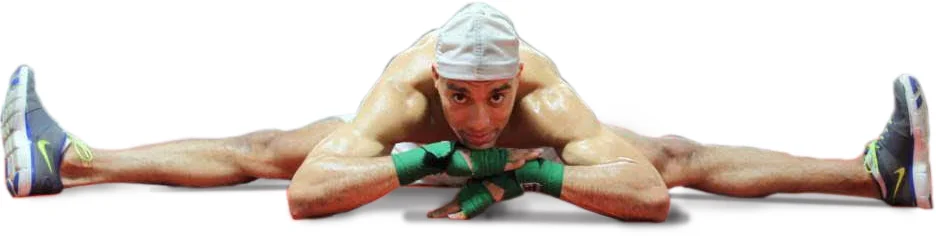
An Interview with Jonathan Janis, dancer and somatic coach, and Margi Douglas

MARGI: What have been your strongest influences as a mover and a teacher and what excites you about them?

JONATHAN: 

  1. partner dance with a teacher who opened the doors to the psychosomatic connection
  2. ideokinesis/ biomechanics - the ability to change the body with imagery
  3. qi gong - I’ll tell a brief story of my qi gong teacher.  He has combined Jungian archetypal imagery with traditional qi gong movements, in order to form new movements that were expressions of his inner psyche.  In this way, I saw the possibility of everything my earlier study had pointed towards -- the ability to work in the inner worlds using movement, and the ability to allow movement to be infused with the processes of the inner self (which I consider to be the fount of all true art).

These things still excite and drive me today, because they represent the utter dissolution of the mind/ body distinction.  They point to the fact that movement is emotional/ psychological, and psychology is physical/ developmental, and spirituality -- who knows?.  It leaves us with immense freedom to create ourselves in areas that previous generations have considered entirely static.  It points towards the existence of a self that could become anything we dream of.  It is radical in the most fundamental conceptions of ourselves and communities, and I find it to be in alignment with teachings of spirituality and the dissolution of Newtonian physics in the past century.  To possess our physical bodies in this way seems to represent the next great leap forward in human thinking.

MARGI: So combining all three it is really an inside to outside approach, would you agree? What do you find helps your students most to open up to movement on this level?

JONATHAN: No I wouldn’t agree... although I sometimes use that paradigm to explain.  To call something inner and outer is to remain in a body/mind paradigm, and is to say that I start with the mind, whereas others start with the body.  Everyone is always working with all the levels -- that is precisely what Pilates and Alexander technique do as well.  I am just calling more attention to the theory behind it all.  

It so happens that the class I’ve prepared for Pilates Garage is for Pilates-based movements, so I will be offering outer movements, and inner imagery.  However, I also have a private practice called Embody the Question, as well as a corporate consulting business helping management communicate more effectively.  I can assure you that not all my clients want to start on a mat!  With some people, you might say that I have an outside --> in approach, with others all outside, with others all inside.  Once again, it ultimately doesn’t matter what we do.  It’s about about how you engender change in a vastly mysterious human system.  What I strive to be is a “people whisperer,” always asking the questions that are relevant to elicit deeper experience.

I find the key to helping people open up lies in cultivating curiosity, ease, and always referring to actual experience.  If experience isn’t improving, I’m not satisfied.  I refer to children and their pre-socialized learning process all the time. Children are the most open, moldable, and curious people on the planet.  They are also largely the most rational: everything they do is based on what works, without theoretical or social pre-conception.  Until just recently, neurology claimed this was because the brain was somehow more plastic at that age, however the past decade of research has shown that we retain the ability to change at all times.  I don’t think the neurological studies have gone far enough yet, because I see that children have plastic minds, precisely BECAUSE they do things easily, effortlessly, and with joy and exploration.  This is why I’m currently collaborating on an embodiment workshop for children AND their parents in a Montessori school.  We will offer the children tools they can use to grow, but we will learn from the children HOW to best apply those tools.  A child isn’t scared to try something different, but they also won’t go along with something that doesn’t work.  That’s what I encourage in my clients - to take responsibility for their own experience!

I always start with what a client wants to change.  For some it is lack of harmony in a marriage, for others low back pain, and for others higher levels of embodiment in pelvic function.  Whatever the case, by de-emphasizing the “problem,” as a stuck entity and regaining curiosity, we can transform the “problem” into a guide, pointing us to a better future experience. 

An Interview with Caroline Feig and Margi Douglas on Feldenkrais

MARGI: What do you love about teaching and/or practicing Feldenkrais?

CAROLINE: I don't think anything has had as profound of an influence on my work (or self-development) as the Feldenkrais Method.  When you practice the Feldenkrais method, you learn to be able to feel so many things that most of us want to feel. In Moshe's words, "it makes the impossible possible, the possible easy and the easy elegant.”  

M: Ok I'm in! Sounds delicious. How do you usually begin with someone who has never done it? Is there a movement experience or a principle that feels like a starting place?

C: Typically, we start at 1A... The very beginning.   In Feldenkrais, there is a concept of meeting a person where they are, wherever that may be...  It can be so comforting when someone just lets you be you. I can still remember the very first time someone did that for me.  It was very powerful.  It made me feel safe and ready to learn. Then, from there on out, the work becomes more of a dialogue then an instruction.  And actually, "work" is a terrible word for it.  It's more like "play."

M: Ha! Ok so it is play. Do you find that people want to turn it into something else like "strength training" or "yoga" or even "pilates"? It seems very strange, to many people, I think to move in a playful way.  We all are so focused on wanting to do something well or to feel the "right" thing.

C: I couldn't agree more.  Often these ideas of "right" or "ideal," serve little more than a moment in time- like a pose in Yoga or posture with weight lifting. Then when it's time to transition, roll, lunge, swing a racket etc., our ideas of  "right" can actually inhibit our ability to move freely.  Feldenkrais thought that instead of "posture," which comes from the root "to post," the word should be "acture," from the root "to act" to reflect how we hold and use ourselves in three dimensional space.

I believe that there usually is, in fact, a right and wrong for most of us.  But often we forget that the "right" has to do with comfort, ease, fun, joy... a feeling of safety and security... something that just feels right.   Sometimes we don't even know what "feels right."  That's ok!  Feldenkrais is an amazing tool for that.

M: It sounds so freeing. So if I walked into a group lesson half way through what would I most likely see? Are people moving in unison or following specific choreography? What kinds of movement would I see?

C: Well, that is a sight to see!  You would most likely see a group of people hearing the same instruction, but doing what appears to be completely different movements!   And that is part of the method- each is aloud to have his own learning process... move in his own way.  A teacher rarely corrects a student’s movement.  More likely, a teacher will help a student to see what he or she is doing.  And then often, through the process of awareness, something really special happens by the end.  The group does tend to move in unison.  Almost in the way the “om” of the group can resonate more at the end of a Yoga class, the movement in the class starts to resonate too. If you’ve never rolled around in unison with a group of 50 people, I highly recommend!  

M: Thank you Caroline. I take your recommendation. And I am definitely looking forward to your workshop at the Pilates Garage! Come one and come all and get ready to resonate together!


Tuesday October 27th 7:30-9:30pm

Meet with the talented Caroline Feig, physical therapist and Feldenkrais practitioner, for this month's workshop entitled:

Unlocking the Jaw with the Feldenkrais Method

This workshop will focus on relaxing and and improving the movements of the face, neck, tongue and jaw.
 

Cost: $50
Reservation required
Please call 718-768-123
E-mail: pilates.garage@gmail.com
Location: 441 3rd Ave @8th Street


PC360 Margi Video

Clients at the Pilates Garage are experiencing a new wave of fitness and therapeutic training using the PC360 eccentric band system in combination with the Cadillac table. Caroline Feig, a physical therapist in residence at the studio, has developed a unique series of exercises that address common hip and knee injuries. She has shared her work with studio teachers and now some of those exercises can be integrated into your Pilates fitness session. Says studio owner Margi Douglas: “It is particularly useful when a client is bridging the gap between therapeutic work and fitness to use the PC360 straps prior to going into the Pilates springs or to help an advanced client gain a new awareness of an old Pilates exercise with a slightly different feeling of resistance, or turning something upside down. The results have been phenomenal, and students have reported feeling a dramatic change in support for a troubled knee or hip by the session’s end."